
Digital Forensic (DFIR) Specialist Roadmap
Digital forensics and incident response roadmap for learners building DFIR skills.
Digital Forensic (DFIR) Specialist Roadmap
A compelete, visual guide to becoming a Digital Forensics and Incident Response (DFIR) specialist.
This roadmap outlines the essential knowledge areas, technical skills, tools, and certifications required to build a successful career in digital forensics.
🗺️ Roadmap
Download:
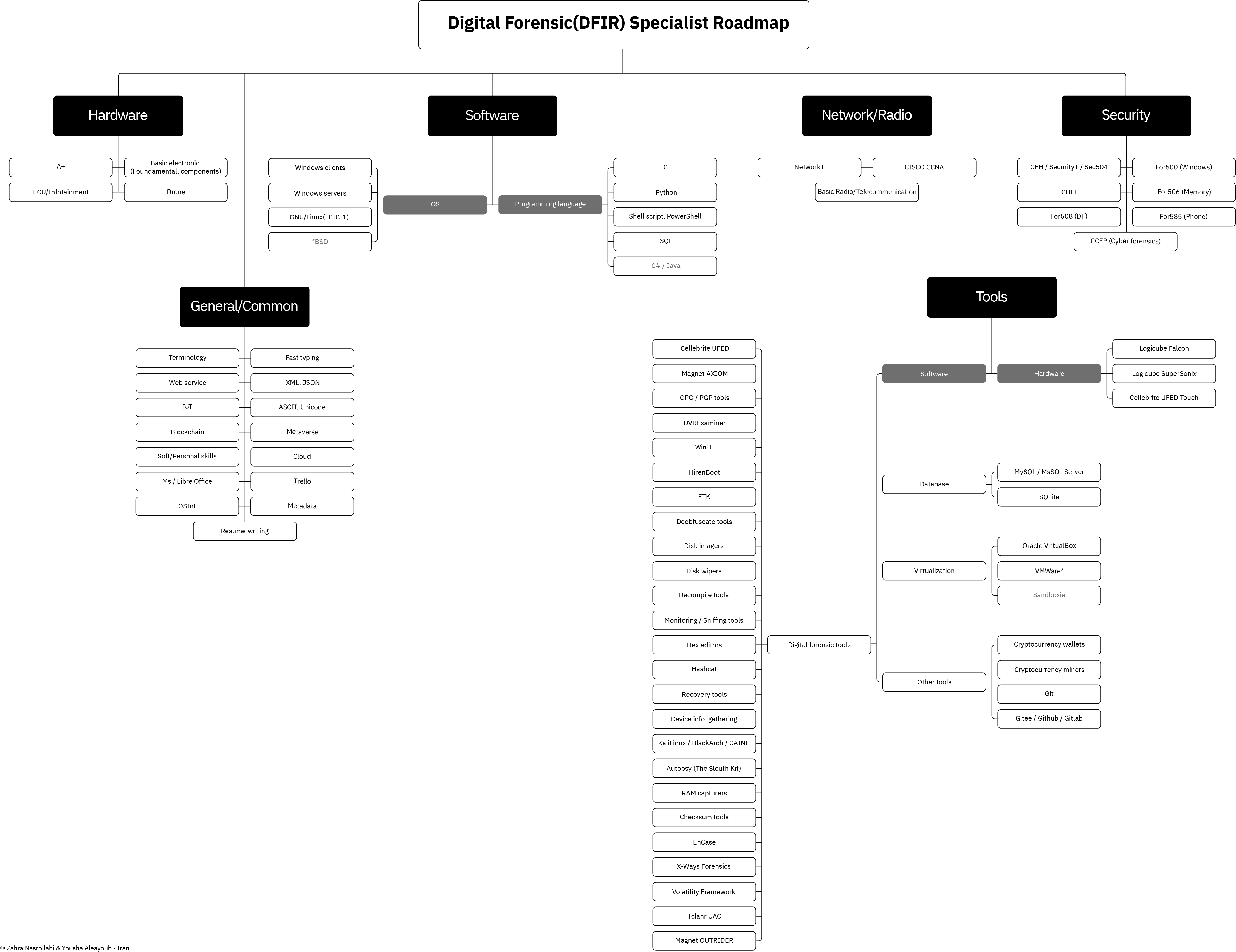
- PNG: https://github.com/Yousha/DFIR-Specialist-Roadmap/releases/latest/download/DFIR.Specialist.Roadmap.png
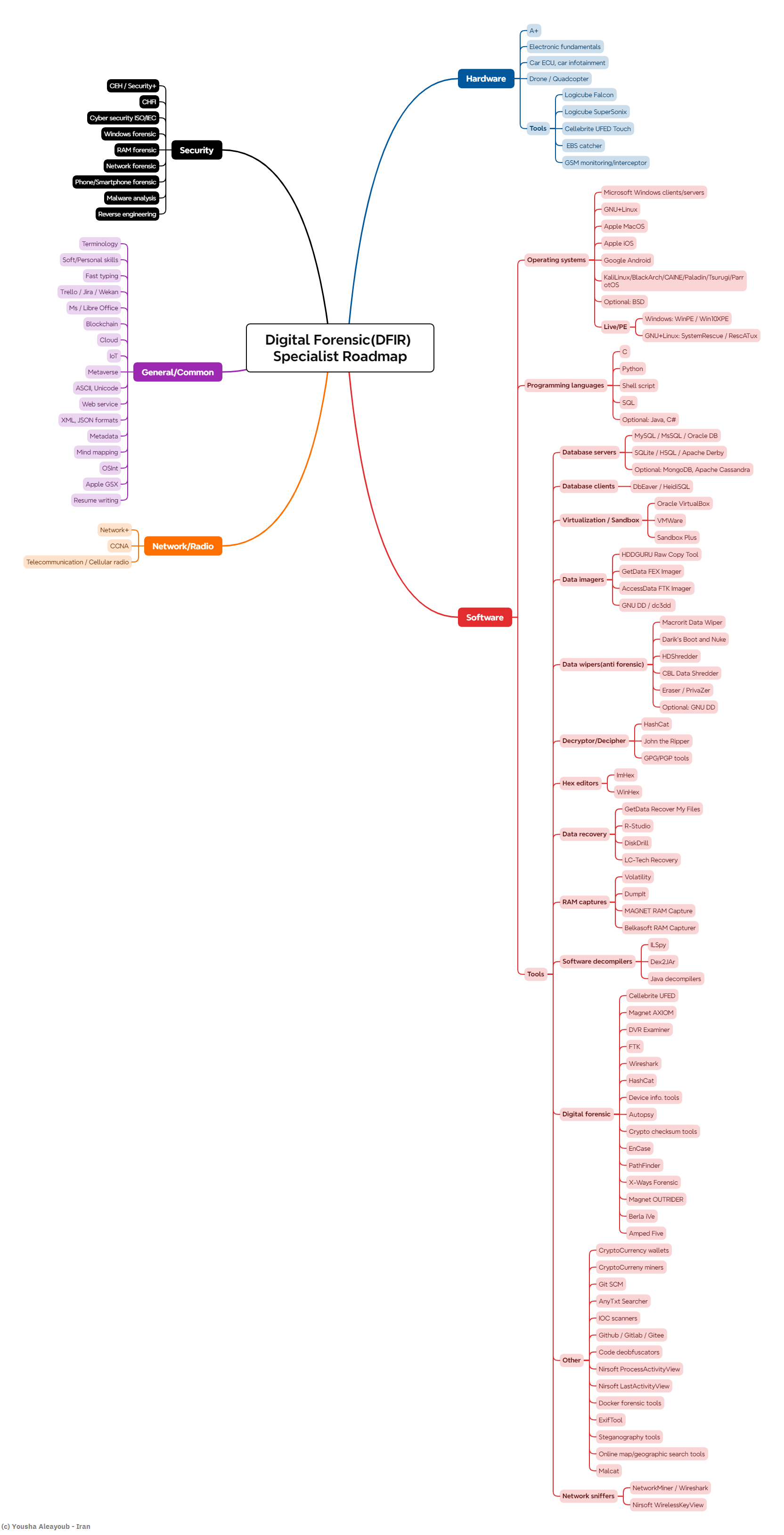
- MindMap: https://github.com/Yousha/DFIR-Specialist-Roadmap/releases/latest/download/DFIR.Specialist.Roadmap.-.MindMap.png
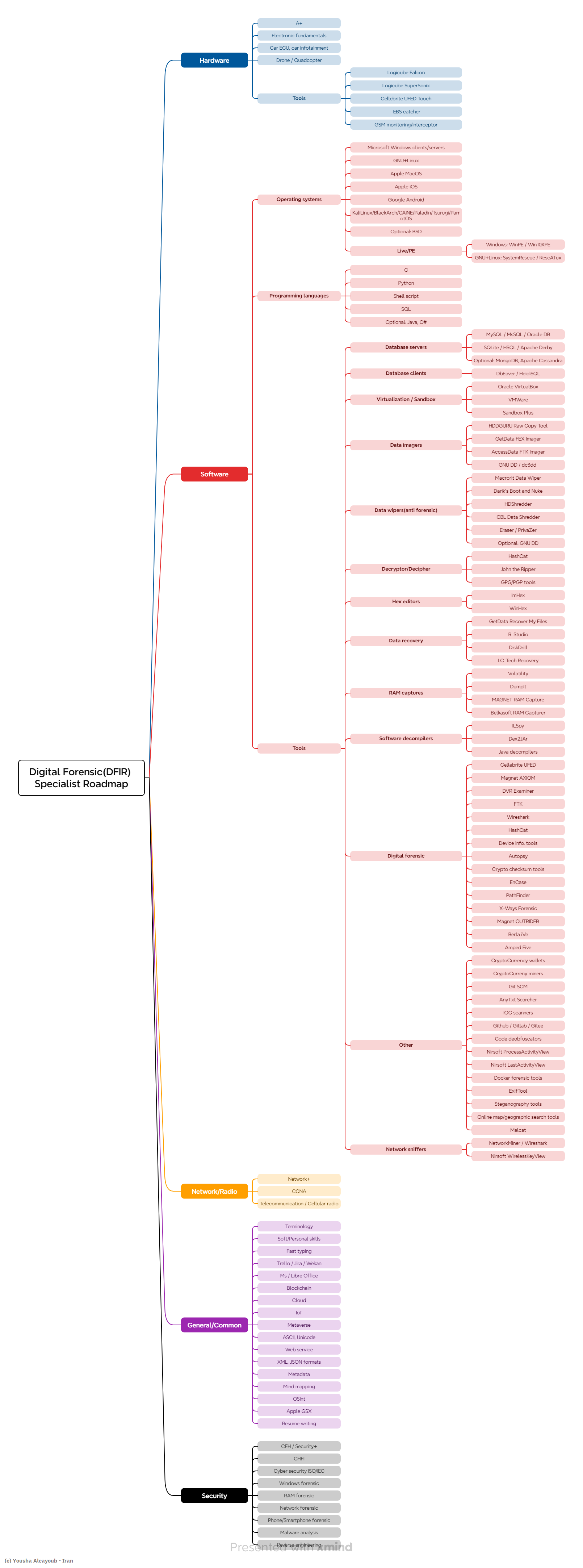
- LogicChart: https://github.com/Yousha/DFIR-Specialist-Roadmap/releases/latest/download/DFIR.Specialist.Roadmap-LogicChart.png
Preview:
Preview - MindMap:
Preview - LogicChart:
🚀 How to Use This Roadmap
- Start at the Top: Begin with foundational topics like Hardware, OS, and Networking.
- Build Progressively: Move from General → Software → Tools → Security.
- Practice Constantly: Use virtual machines, CTFs, and real-world labs.
- Certify Strategically: Prioritize certs like CHFI, For500, or Security+ early; pursue SANS courses as you advance.
- Specialize Later: Once comfortable with core areas, focus on niches like Memory Forensics, Mobile, car, or Cloud.
💡 Tip: Don’t try to learn everything at once. Focus on one domain per month and do hands-on operations.
🙏 Credits
- Data: Yousha Aleayoub
- Design: Zahra Nasrollahi (for Adobe AI design)
📜 License
This document is licensed under the CC0 1.0 Universal. See LICENSE file
✅ Remember: A good DFIR specialist doesn’t just know tools — they understand systems, think critically, and communicate findings clearly. Keep learning and never stop investigating!