
martuscellifaria/ahoicpp.nvim
Sets up C++ projects on a modular fashion and helps newcomers with the language heavy lifting.
AhoiCpp


A.H.O.I. Labs (Alex's Heavily Opinionated Interfaces) presents you AhoiCpp.
AhoiCpp is an opinionated way to start cross platform C++ projects in Neovim. AhoiCpp lets you create classes, libraries and your own app entrypoint with the respective build process.
Dependencies
AhoiCpp assumes you have a C++ 23 capable compiler (I use g++ 14.3.0 on my development environment), cmake, git and python installed. If not, you should do it first.
Of course you have to have Neovim as well, version 0.11 or higher is recommended, since some vim.api and vim.fn functions are new.
Installation
Using lazy.nvim
{
    'martuscellifaria/ahoicpp.nvim',
    config = function()
      require('ahoicpp').setup()
    end,
}
Manual Installation
Clone the repository and add it to your Neovim runtime path:
git clone https://github.com/martuscellifaria/ahoicpp.nvim ~/.config/nvim/pack/plugins/start/ahoicpp.nvim
Usage
Default Keymaps
| Command | Description |
|---|---|
<leader>cph |
Opens the about/help menu from AhoiCpp |
<leader>cpa |
Creates C++ application with respective CMake files and scripts |
<leader>cpm |
Creates C++ class within modules directory and add CMake files |
<leader>cpd |
Creates C++ class within custom named directory and add CMake files |
<leader>cpe |
Clones external Git repository to the externals directory of the C++ project |
<leader>cpt |
Toggles autocompilation at module and/or app creation (enabled by default) |
<leader>cpb |
Toggles build type (release/debug) |
<leader>cpc |
Compiles the current C++ project |
Configuration
AhoiCpp provides a configurable interface. The default follows:
{
    autocompile_on_create = true,
    compile_as_debug = false,
    enable_popups = true,
    git_init = true,
    keymaps = {
        group_c  = "<leader>c",
        group_cp = "<leader>cp",
        help = "<leader>cph",
        create_app = "<leader>cpa",
        create_module = "<leader>cpm",
        create_module_dir = "<leader>cpd",
        clone_external = "<leader>cpe",
        toggle_autocompile = "<leader>cpt",
        toggle_debug_compilation = "<leader>cpb",
        compile = "<leader>cpc",
    },
}
You are also able to override the keymap bindings, for example:
{
    'martuscellifaria/ahoicpp.nvim',
    config = function()
      require('ahoicpp').setup({keymaps = {compile = "<leader>cc"}})
    end,
}
Project structure
After running <leader>cpa YourApp:
YourApp/
├── .ahoicpp
├── .gitignore
├── .git/
├── CMakeLists.txt
├── AhoiCppProject.cmake
├── AhoiCppExternals.cmake
├── build.py
├── App/
│   ├── AhoiCppSubdirs.cmake
│   ├── CMakeLists.txt
│   ├── src/
│   │   └── YourApp.cpp
│   └── version.h.in (or version.rc.in)
├── Modules/           (created when you add modules)
└── externals/         (created for Git dependencies)
    └── README.md
Demo
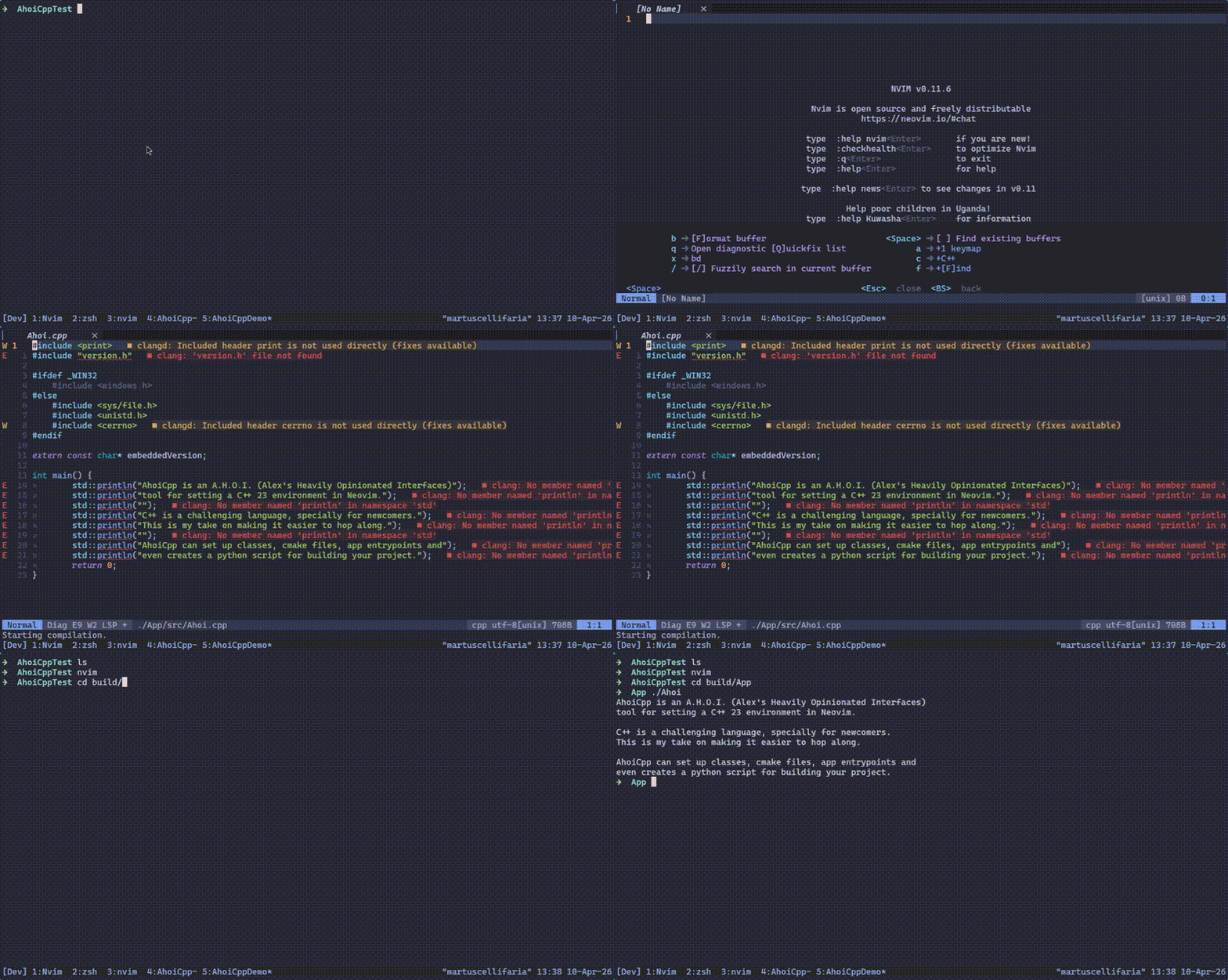
Creating and getting your first C++ app compiled
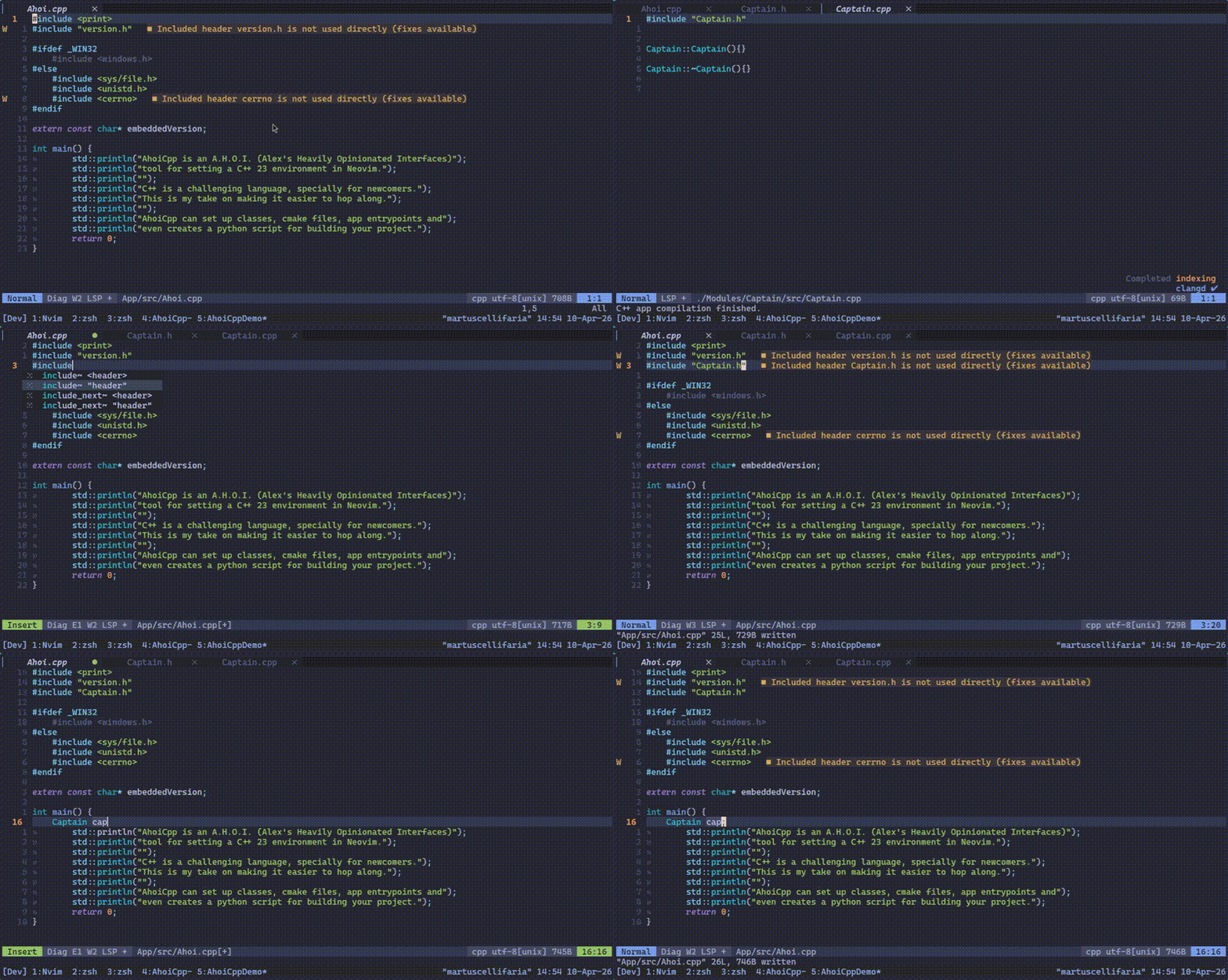
Adding new classes to your project
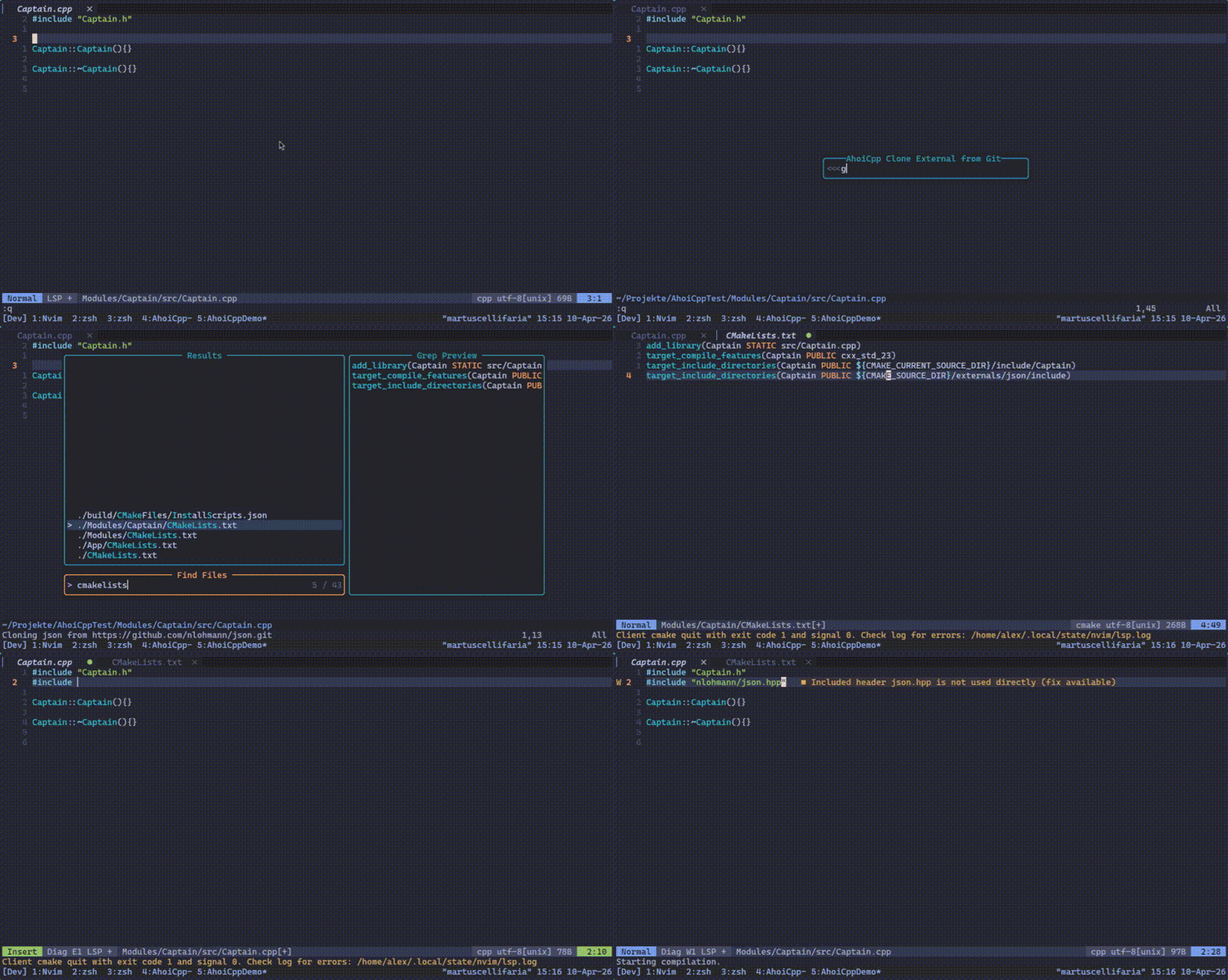
Adding external dependencies from git repositories
Check Health
For health status of AhoiCpp, you can always run :checkhealth ahoicpp from the Neovim command line.
Tests
Running tests
AhoiCpp uses plenary.nvim for testing. To run the tests:
1. Ensure Plenary.nvim is installed.
2. Navigate to the plugin directory:
```bash
cd ~/.local/share/nvim/lazy/ahoicpp.nvim
```
3. Run the tests from the command line:
```bash
nvim --headless -c "lua require('plenary.test_harness').test_directory('tests/spec', { minimal_init = 'tests/minimal_init.lua' })" -c "qa"
```
You can of course run the tests from inside Neovim. Just navigate to the directory where ahoicpp is installed, open neovim and then run:
:lua require('plenary.test_harness').test_directory('tests/spec', { minimal_init = 'tests/minimal_init.lua' })
For single file testing, you can use:
:lua require('plenary.test_harness').test_file('tests/spec/utils_spec.lua', { minimal_init = 'tests/minimal_init.lua' })
Test tree
The tests for AhoiCpp are structured as follows:
tests/
├── minimal_init.lua       # Test environment setup
└── spec/
    ├── utils_spec.lua     # Filesystem and validation tests
    ├── config_spec.lua    # Configuration tests
    ├── templates_spec.lua # Template generation tests
    ├── project_spec.lua   # Project creation tests
    └── build_spec.lua     # Build system tests
Troubleshooting
| Error | Solution |
|---|---|
| "AhoiCpp is not initialized" | Run <leader>cpa first |
| "Python not found" | Install Python and ensure it's in PATH |
| Compilation fails | Check build/build.log |
License
MIT (see LICENSE for details)