
Clean Architecture with Blazor Server
Another template with MudBlazor and CleanArchitecture approach.
Clean Architecture Blazor Server application template





A production-ready Blazor Server application template built on Clean Architecture principles, offering advanced code generation, AI-assisted development workflows, and enterprise-grade capabilities for building scalable and maintainable systems.
🎯 Overview
This repository provides a production-grade Blazor Server solution template designed in strict accordance with Clean Architecture principles and modern enterprise application standards.
Built on .NET 10, the template demonstrates a well-structured, scalable, and maintainable architecture for developing complex business systems. It integrates advanced code generation capabilities, AI-assisted development workflows, and specification-driven design patterns, enabling teams to accelerate development while preserving architectural consistency and code quality.
This project has officially said goodbye to MediatR and AutoMapper, replacing them with Mediator and Mapster for a simpler and more modern architecture.
The solution is intended to serve both as a reference implementation for Blazor Clean Architecture best practices and as a ready-to-use foundation for enterprise-level applications that require long-term maintainability, extensibility, and high development efficiency.
Key Features
- 🏗️ Clean Architecture: Strict layer separation with dependency inversion
- 🎨 Modern UI: Beautiful, responsive interface built with MudBlazor
- ⚡ Real-time Communication: SignalR integration for live updates
- 🔐 Enterprise Security: Multi-factor authentication, role-based access control
- 🌐 Multi-tenancy: Built-in tenant isolation and management
- 📊 Advanced Data Grid: Sorting, filtering, pagination, and export capabilities
- 🎨 Code Generation: Visual Studio extension for rapid development
- 🔄 Modern Application Pipeline:
MediatorandMapsterreplace the previousMediatRandAutoMapperstack - 🐳 Docker Ready: Complete containerization support
- 📱 Progressive Web App: PWA capabilities for mobile experience
🌟 Live Showcase
Experience the application in action:
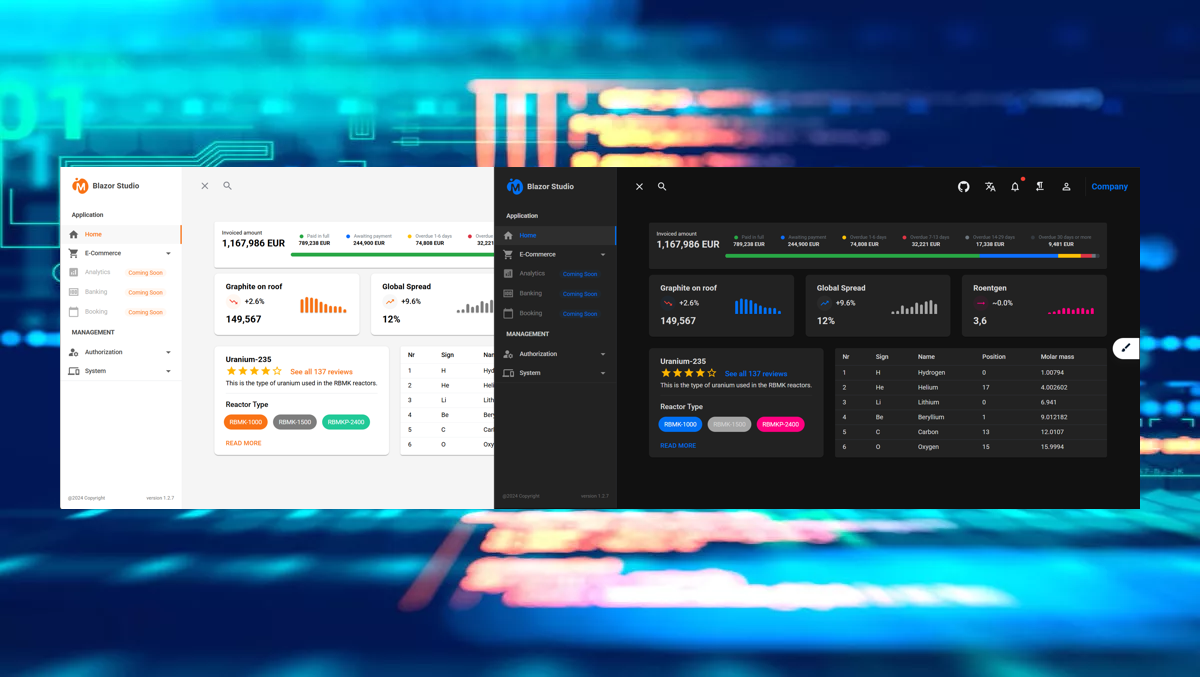
Live Demo: architecture.blazorserver.com
Featured Projects Built with This Template
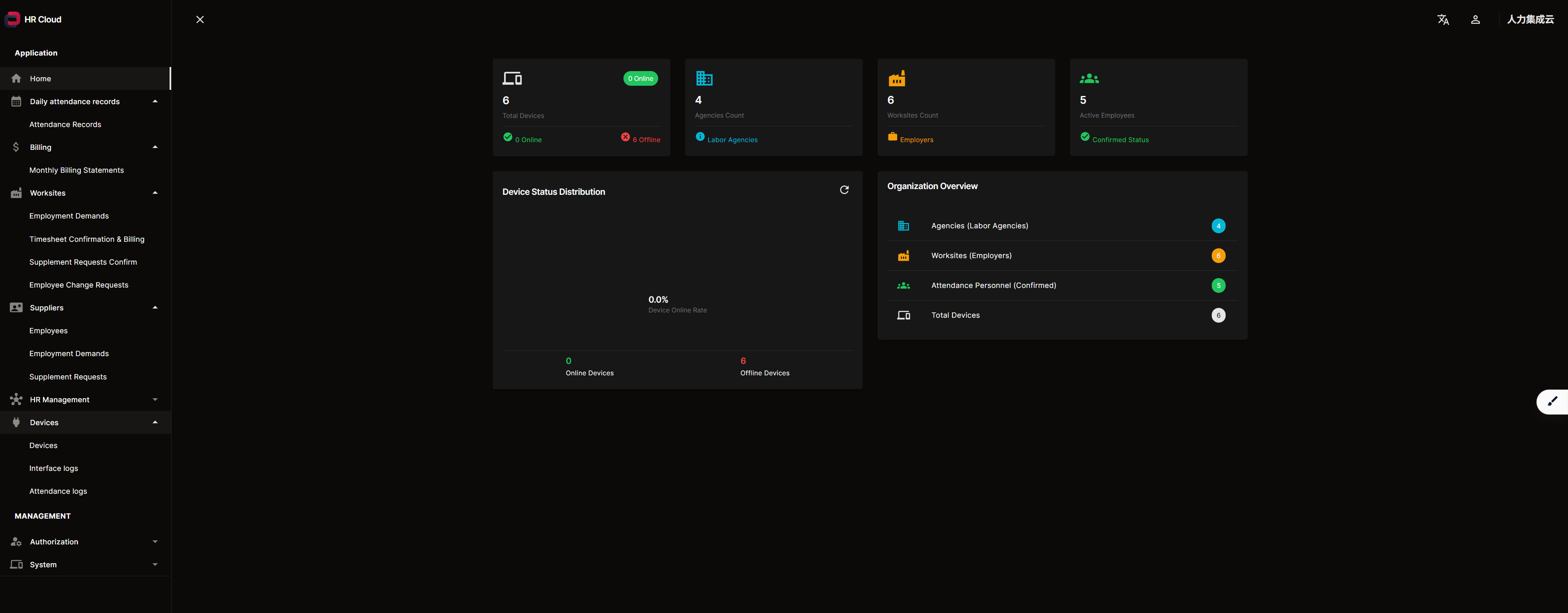
Enabling collaboration between employers, suppliers, and HR management with integrated attendance, work hours, and billing in a seamless online closed loop.
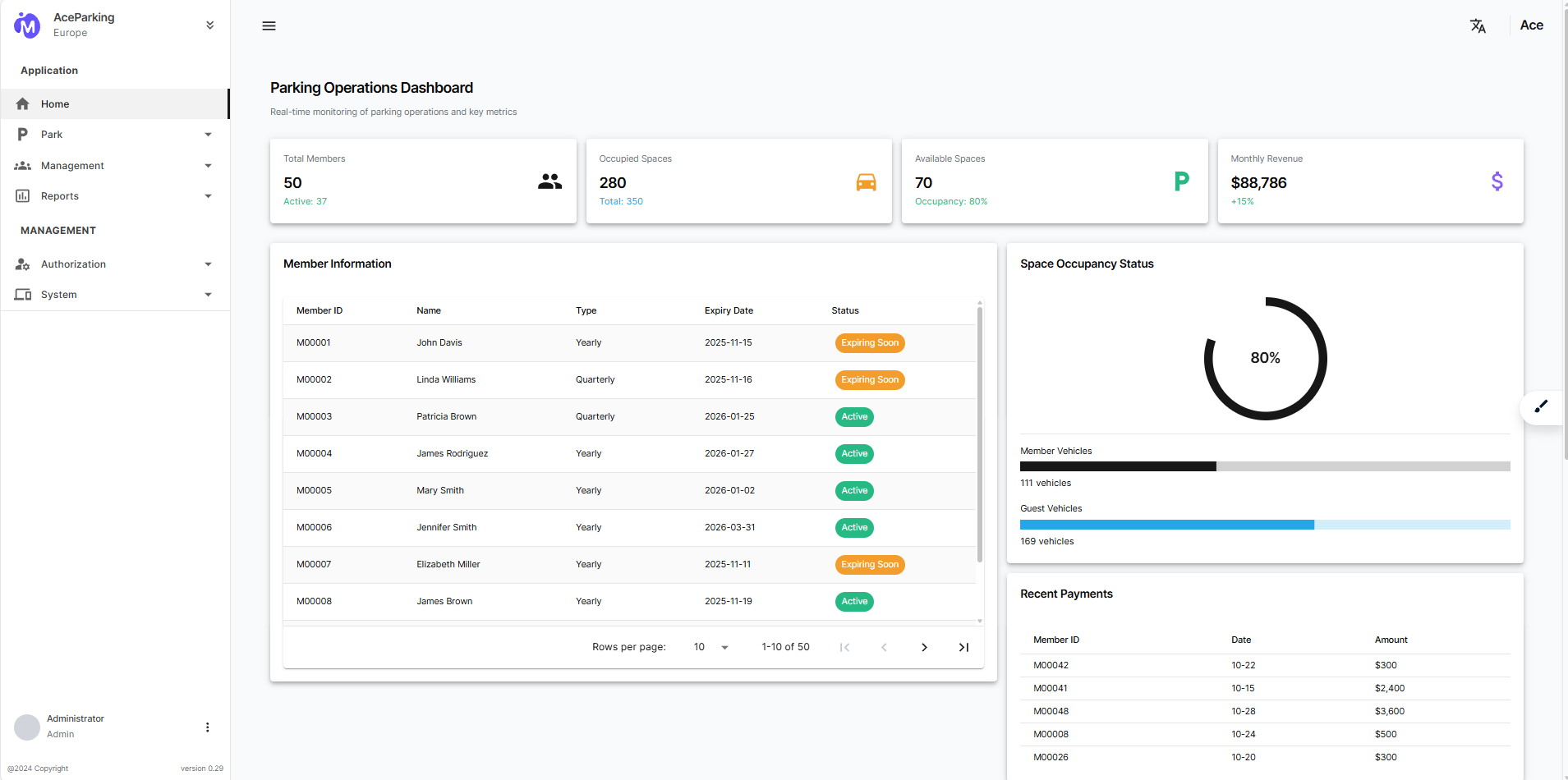 BLAZOR PARKING SYSTEM - GitHub | Live Demo
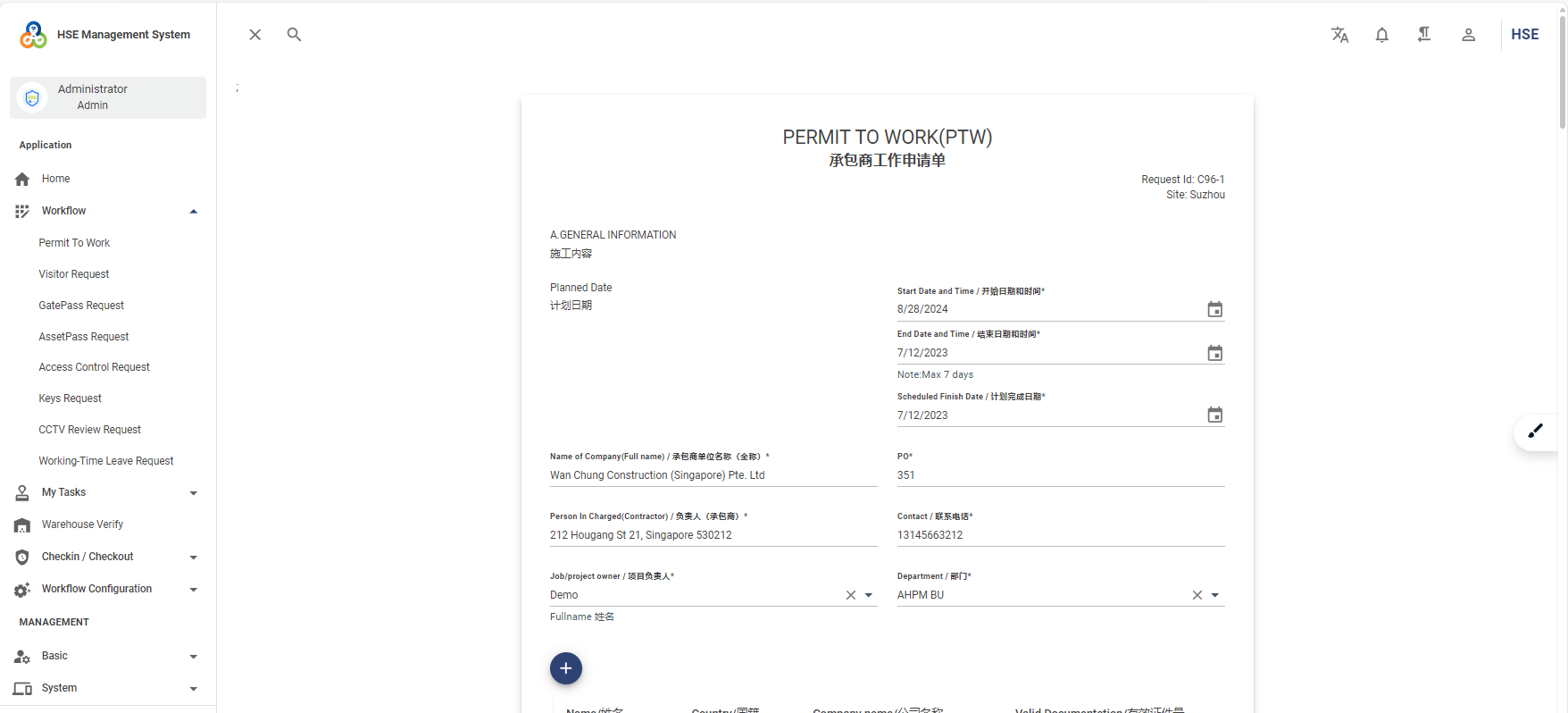 HSE Management System - GitHub | Live Demo
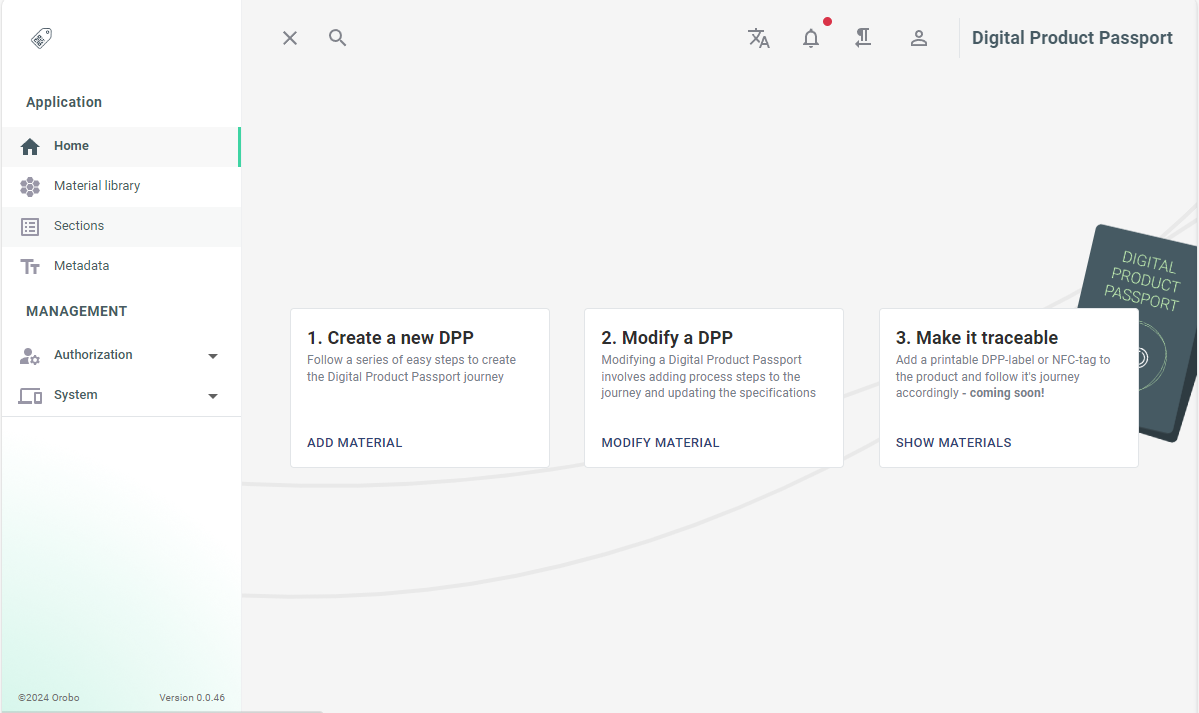 EU Digital Product Passport - Live Demo
🛠️ Technology Stack
| Layer | Technologies |
|---|---|
| Frontend | Blazor Server, MudBlazor, SignalR |
| Backend | .NET 10, ASP.NET Core, Mediator, Mapster, FluentValidation |
| Database | Entity Framework Core, MSSQL/PostgreSQL/SQLite |
| Authentication | ASP.NET Core Identity, OAuth 2.0, JWT |
| Caching | FusionCache, Redis |
| Background Jobs | Hangfire |
| Testing | xUnit, FluentAssertions, Moq |
| DevOps | Docker, GitHub Actions |
🏗️ Architecture Overview
┌─────────────────┐    ┌─────────────────┐    ┌─────────────────┐
│   Server.UI     │    │  Application    │    │     Domain      │
│   (Blazor)      │───▶│   (Business)    │───▶│   (Entities)    │
└─────────────────┘    └─────────────────┘    └─────────────────┘
         │                        │
         │              ┌─────────────────┐
         └─────────────▶│ Infrastructure  │
                        │   (Data/IO)     │
                        └─────────────────┘
Layer Responsibilities
- Domain: Core business entities and rules (no dependencies)
- Application: Business logic, interfaces, and DTOs
- Infrastructure: External concerns (database, email, file system)
- Server.UI: Blazor components and user interface
📋 Development Workflow
The project includes a comprehensive Development Workflow with:
- Task Management: Structured approach to feature development
- Code Review Guidelines: Quality assurance processes
- Testing Strategies: Unit and integration testing patterns
- Deployment Procedures: CI/CD pipeline configurations
🚀 Quick Start
Prerequisites
- .NET 10 SDK
- Visual Studio 2022 or Rider
- Docker Desktop (optional)
Installation
Install the Template
dotnet new install CleanArchitecture.Blazor.Solution.TemplateCreate New Project
dotnet new ca-blazorserver-sln -n YourProjectName
cd YourProjectName
Setup Database
dotnet ef migrations add InitialCreate --project src/Migrators/Migrators.MSSQL --startup-project src/Server.UI --context ApplicationDbContextRun the Application
dotnet run --project src/Server.UIAccess the Application
- Navigate to
https://localhost:7152 - Login with default credentials (see documentation)
- Navigate to
🐳 Docker Deployment
Run with configured database provider (In-Memory removed):
docker run -p 8443:443 \
  -e DatabaseSettings__DBProvider=mssql \
  -e DatabaseSettings__ConnectionString="Server=127.0.0.1;Database=BlazorDashboardDb;User Id=sa;Password=<YourPassword>;MultipleActiveResultSets=true;Encrypt=false;TrustServerCertificate=false" \
  blazordevlab/cleanarchitectureblazorserver:latest
Production Setup (docker compose):
docker-compose up -d
See Docker Setup Documentation for detailed configuration.
📚 Documentation
- Architecture Guide: Detailed architecture explanation
- Development Workflow: Step-by-step development process
- API Documentation: Complete API reference
- Deployment Guide: Production deployment instructions
- Contributing Guidelines: How to contribute to the project
📐 Using Superpowers for Design and Planning
This repository recommends using the content under docs/superpowers/ for design notes, implementation plans, and workflow guidance when a change needs more than a quick edit.
Recommended Workflow
- Explore the existing implementation first.
Review similar features in
src/Application/Features, related UI pages insrc/Server.UI, and the current setup instructions inREADME.md. - Write down design or planning notes when the task is non-trivial.
Store them under
docs/superpowers/specs/ordocs/superpowers/plans/. - Implement by following existing repository patterns. Reuse the Contacts-style module structure, current pipeline behaviors, validation approach, and navigation conventions where applicable.
- Verify the change before finishing. Run the relevant build and test commands, then update documentation if setup or workflow steps changed.
Tips
- Use existing modules as the reference implementation for structure and conventions.
- Add menu entries in
src/Server.UI/Services/Navigation/MenuService.cs. - Define permissions under
Permissions.<Module>so they are included during seeding. - For data access in handlers, prefer the current per-operation context lifetime patterns already used in the repository.
🔧 Code Generation
Accelerate development with the Visual Studio extension:
- CleanArchitecture CodeGenerator
- Automatically generates layers for new entities
- Maintains architectural consistency
- Reduces boilerplate code by 80%
🗄️ Database Support
| Database | Provider Name | Status |
|---|---|---|
| SQL Server | mssql |
✅ Fully Supported |
| PostgreSQL | postgresql |
✅ Fully Supported |
| SQLite | sqlite |
✅ Fully Supported |
Configure in appsettings.json:
{
  "DatabaseSettings": {
    "DBProvider": "mssql",
    "ConnectionString": "Server=localhost;Database=YourDb;Trusted_Connection=true;"
  }
}
🔐 Authentication Providers
Configure OAuth providers in appsettings.json:
- Microsoft: Setup Guide
- Google: Setup Guide
- Facebook: Setup Guide
- Twitter: Setup Guide
🚀 Docker Setup for Blazor Server Application
Pull the Docker Image
docker pull blazordevlab/cleanarchitectureblazorserver:latest
Run the Docker Container
For Development:
docker run -p 8443:443 -e ASPNETCORE_ENVIRONMENT=Development -e ASPNETCORE_HTTPS_PORTS=443 \
  -e DatabaseSettings__DBProvider=mssql \
  -e DatabaseSettings__ConnectionString="Server=127.0.0.1;Database=BlazorDashboardDb;User Id=sa;Password=<YourPassword>;MultipleActiveResultSets=true;Encrypt=false;TrustServerCertificate=false" \
  blazordevlab/cleanarchitectureblazorserver:latest
For Production (Persistent Database and SMTP Configuration):
docker run -d -p 8443:443 \
-e ASPNETCORE_ENVIRONMENT=Development \
-e ASPNETCORE_HTTP_PORTS=80 \
-e ASPNETCORE_HTTPS_PORTS=443 \
-e DatabaseSettings__DBProvider=mssql \
-e DatabaseSettings__ConnectionString="Server=127.0.0.1;Database=BlazorDashboardDb;User Id=sa;Password=<YourPassword>;MultipleActiveResultSets=true;Encrypt=false;TrustServerCertificate=false" \
-e SmtpClientOptions__User=<YourSMTPUser> \
-e SmtpClientOptions__Port=25 \
-e SmtpClientOptions__Server=<YourSMTPServer> \
-e SmtpClientOptions__Password=<YourSMTPPassword> \
-e Authentication__Microsoft__ClientId=<YourMicrosoftClientId> \
-e Authentication__Microsoft__ClientSecret=<YourMicrosoftClientSecret> \
-e Authentication__Google__ClientId=<YourGoogleClientId> \
-e Authentication__Google__ClientSecret=<YourGoogleClientSecret> \
-e Authentication__Facebook__AppId=<YourFacebookAppId> \
-e Authentication__Facebook__AppSecret=<YourFacebookAppSecret> \
blazordevlab/cleanarchitectureblazorserver:latest
Docker Compose Setup
For easier management, use a docker-compose.yml file:
version: '3.8'
services:
  blazorserverapp:
    image: blazordevlab/cleanarchitectureblazorserver:latest
    environment:
      - ASPNETCORE_ENVIRONMENT=Development
      - ASPNETCORE_URLS=http://+:80;https://+:443
      - ASPNETCORE_HTTP_PORTS=80
      - ASPNETCORE_HTTPS_PORTS=443
      - DatabaseSettings__DBProvider=mssql
      - DatabaseSettings__ConnectionString=Server=127.0.0.1;Database=BlazorDashboardDb;User Id=sa;Password=***;MultipleActiveResultSets=true;Encrypt=false;TrustServerCertificate=false
      - SmtpClientOptions__User=<YourSMTPUser>
      - SmtpClientOptions__Port=25
      - SmtpClientOptions__Server=<YourSMTPServer>
      - SmtpClientOptions__Password=<YourSMTPPassword>
      - Authentication__Microsoft__ClientId=<YourMicrosoftClientId>
      - Authentication__Microsoft__ClientSecret=<YourMicrosoftClientSecret>
      - Authentication__Google__ClientId=<YourGoogleClientId>
      - Authentication__Google__ClientSecret=<YourGoogleClientSecret>
      - Authentication__Facebook__AppId=<YourFacebookAppId>
      - Authentication__Facebook__AppSecret=<YourFacebookAppSecret>
    ports:
      - "8443:443"
    volumes:
      - files_volume:/app/Files

  mssql:
    image: mcr.microsoft.com/mssql/server:2022-latest
    environment:
      - ACCEPT_EULA=Y
      - SA_PASSWORD=YourStrongPassword!
    ports:
      - "1433:1433"
    volumes:
      - mssql_data:/var/opt/mssql

volumes:
  files_volume:
  mssql_data:
🤝 Contributing
We welcome contributions! Please see our Contributing Guidelines for details.
- Fork the repository
- Create a feature branch
- Make your changes
- Add tests
- Submit a pull request
📖 Learning Resources
Video Tutorials
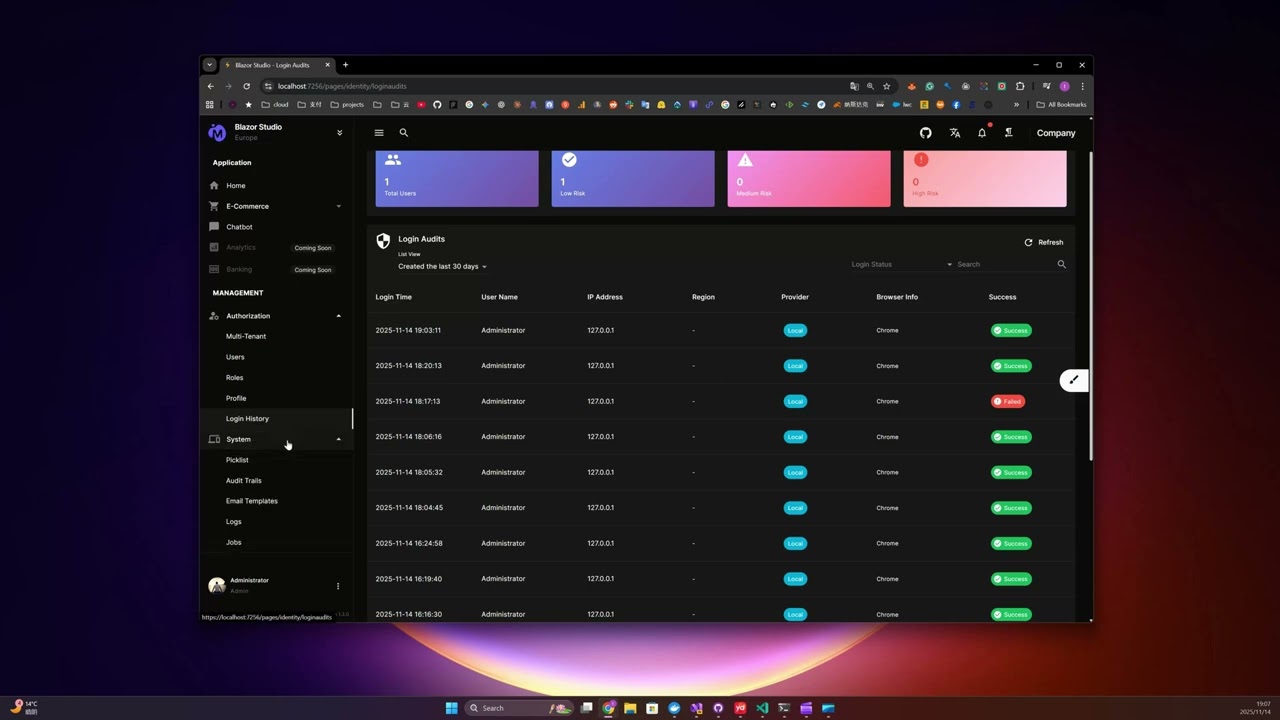 Passkey Authentication Implementation for .NET 10 Blazor Server
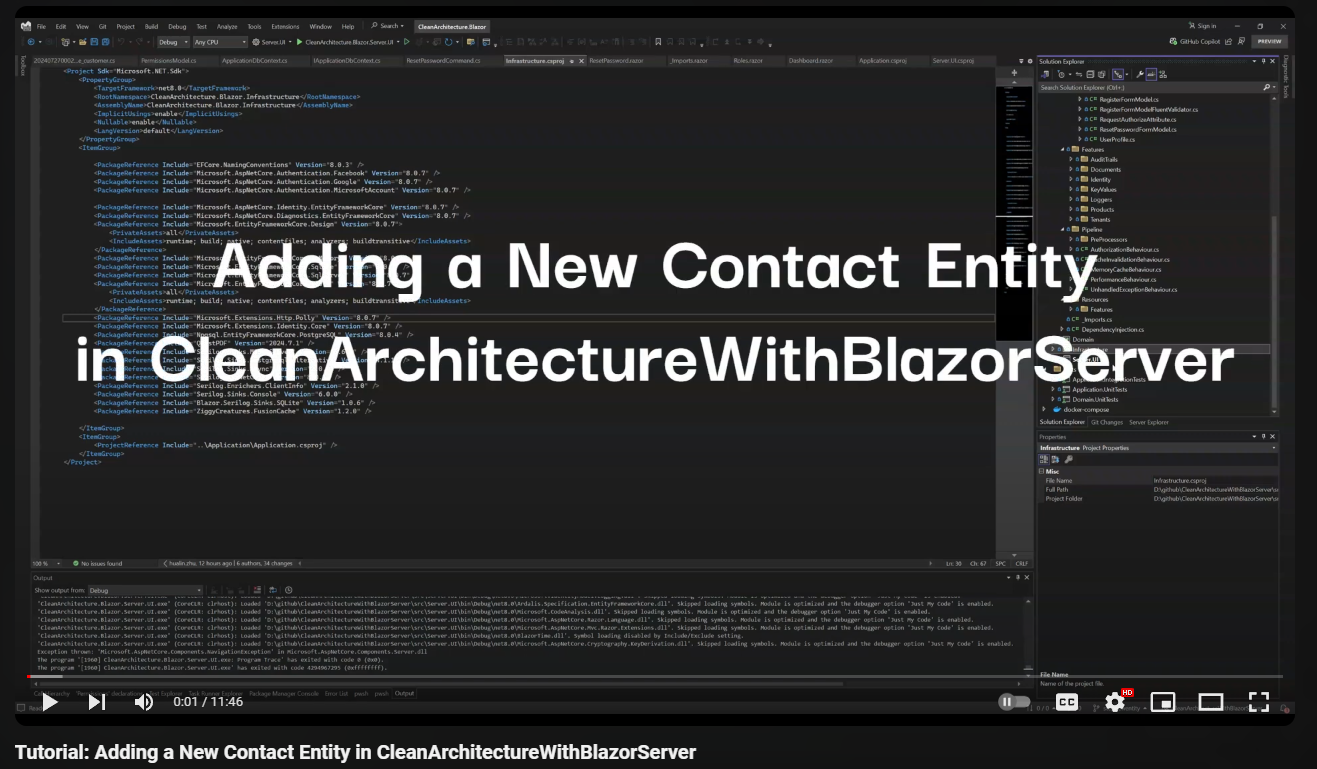 Tutorial: Adding a Contact Entity
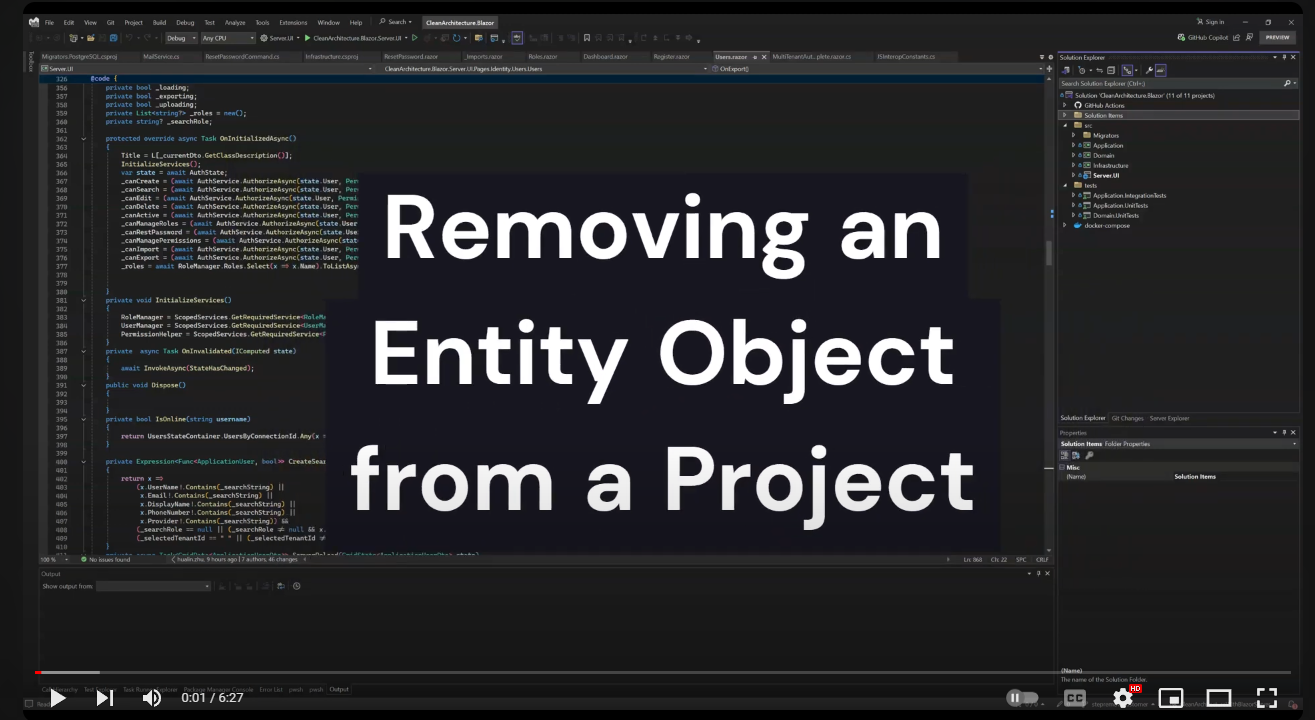 Tutorial: Removing a Customer Object
Related Projects
- CleanAspire: Blazor WebAssembly version with .NET Aspire
- CleanArchitecture CodeGenerator: Visual Studio extension
🌐 About the Creator
Visit my website for more Blazor resources and professional services:
BlazorServer.com - Blazor Development Services & Resources
❤️ Support This Project
If this project helps you, please consider supporting its development:
- ⭐ Star this repository
- 🐛 Report issues
- 💡 Suggest features
- 💰 Sponsor: GitHub Sponsors | PayPal
Your support helps maintain and improve this project. Thank you! 🙏
📄 License
This project is licensed under the MIT License - see the LICENSE file for details.
Built with ❤️ using Clean Architecture principles